– Revisiting Friedrichstal and exploring Waldesian origins – 2026
Note-** designates a direct ancestor of mine in the following text
As a young girl I loved visiting my dear lifelong friend Stella. It felt like escaping into another more wonderful world where everything was beautiful. Her family was from Northern Italy, her father from Turin. One summer I met Stella in Turin when she was visiting her uncle and aunt. Her uncle lent us his car to drive to Pietra Ligure where we bathed in the sun and floated in the still cool waters of the blue Ligurian Sea. Stella insisted that I drive. She was most impressed that I managed driving on the right side of the road being used to driving on the left in South Africa. Stella had seen a pair of shoes in a shop window she liked when strolling through Turin. Once Stella had set her mind on something she was unstoppable, so we had to return to the shop when open to buy the shoes. Unfortunately, they had been sold. The shopkeeper gave us the name of another shop where we might find the same shoes. We ended up traipsing up and down almost every street in Turin looking for these shoes. Eventually, just when we were about to give up, we found them upstairs in a small shoe shop with its entrance hidden from the road. They had red roses embroidered on them and were so beautiful that I also bought a pair. As we walked around we stopped in at several shops along the way. At one having a sale, I bought a Michael Kors handbag and Stella a big golden bag. I still have these shoes, and I still love them, not only because of their inherent beauty, but because they bring back precious memories of my time with my special friend.
Stella’s mother, Antonia was of noble descent. Her father was a Venetian count. Antonia was petite and elegant, with a cream complexion and short dark hair. She was a proficient opera singer and talented artist. She told me that I had a French-look and called me “Mona Lisa” even though Lisa Camilla di Antonmaria Gherardini was of Italian aristocratic decent. I was always a bit embarrassed when she said this, yet I did have a natural passion for the French language, picked it up quickly at school and romanticised about living in France. Nevertheless, I dismissed her comments, knowing that my mother’s family roots were from Northen England and believed that my father’s were German. Having French lineage and a possible connection to nobility was a wonderful dream.
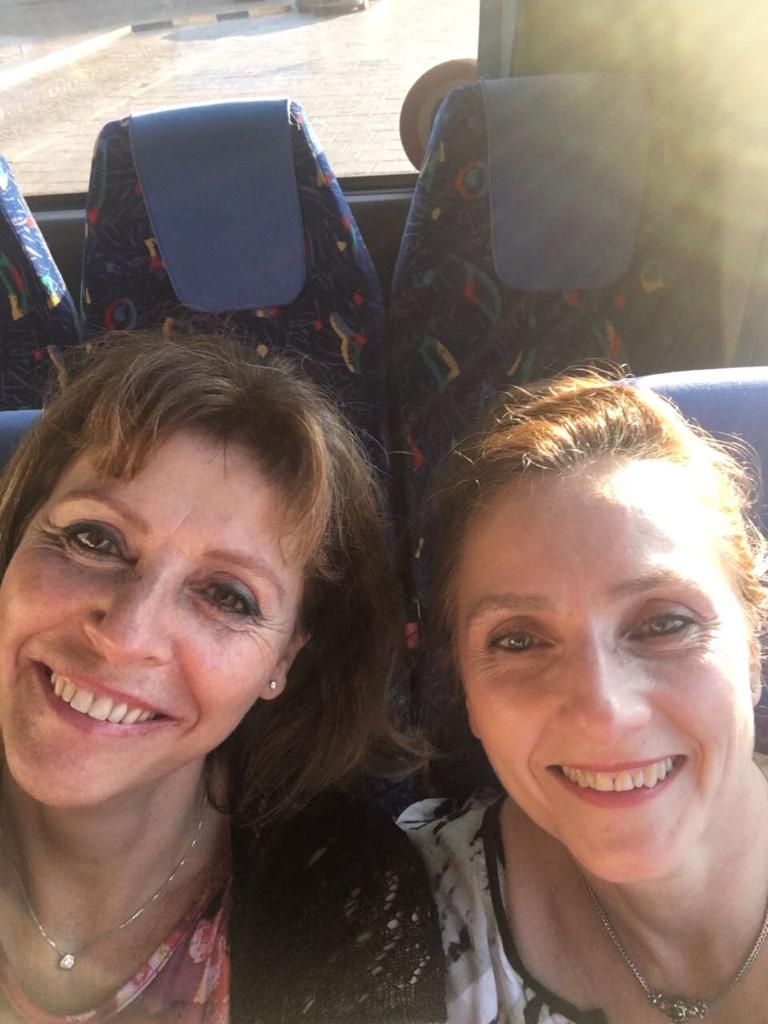
24-25th January 2026 – Friedrichstal and Weingarten
Friedrichstal
Researching the family tree was something my mother and my maternal great aunts did. I imagine that got me interested in researching my father’s line. I was driven by dreams of links to German and Prussian nobility, probably motivated a subconscious desire to disprove my mother’s claims in ire that my father was descended from German peasants. After looking up many wrong roads, Wilfried, my staunch support in all my genealogically motivated endeavours and reliable German translator, eventually managed to decipher my great-great grandfather, **Johann Michael Clur‘s, birthplace – Welschneureut – on his death certificate. Welschneureut was incidentally incorrectly spelt on that certificate, attesting to my belief that the person filling out the form had never heard of the place, had no idea where it was and didn’t have the slightest interest in finding out.
Once I had a birthplace – Welschneureut – I could start my research in earnest. The land of Neureurt had suffered plundering and invasions by soldiers during the Thirty Years War (1618-1648) and the Palatine Succession War (1688-1697) that lead many of the local population to flee the village. Markgraf Friedrich Magnus of Barden-Durlach invited the persecuted, French speaking Calvinists-Huguenots (members of the Protestant Reformed Church of France), Walloons and Waldensians to help repopulate the land of Neureut. The Waldensian group received their settlement grant to establish a colony there on the 17th September 1699. Their colony was called Welschneureut to distinguish it from the original German-speaking village which became Teutschneureut.
With the help of the transcriptions of the Welschneureut Church Records 1700-1809 by Cathryn S. Dippo, I discovered that my great-great grandfather Johann Michael Clur was born in 1830 and was the probably illegitimate son of Catharina Clour (1806-1848). He was born and baptized on the 22nd July 1830 at the Evangelical Church of Welschneureut. This has also been confirmed by a DNA match between myself and a descendant of Phillip Jakob Grether son of Catharina Clour and Johann Peter Groether. Of course I wanted to go back further, but as no father is mentioned on the record, I could only trace the name Clour further back.
I managed to trace back to the baptism record of Anne Clour born on the 19th November 1715 to **Nicolas Clour and **Susanne Thibaut. A list of the original 58 Waldesian families that settled in Welschneureut in 1699 can be seen on the corner of Neureut Hauptstrasse and Welschneureuterstrasse today. There is no Clour on that list, however the name **Jean Pierre Thibaut is listed as number 13.
Markgraf Friedrich Magnus also designated a plot of land for the development of Friedrichstal on the 10th December 1699. The town’s privileges included the right to speak French and follow the Reformed religion. Seventy Huguenots, Flemings and Walloons (some from Picardy) made up the original 13-15 families that settled there. They had previously lived in Billigheim and Mörlheim in the Palatinate, possibly from after Elector Karl Ludwig granted Flemings permission to settle in Billigheim in 1664. Jacques de Gorenflo, a Walloon nobleman, became the first Mayor.
Friedrichstal is about 16 km from Welschneuruert and marriages between the two villages were not uncommon. Transcripts of the Friedrichstal Church Records 1698-1812, also by Cathryn S. Dippo, confirmed that my 7x great grandfather Nicolas Clour, son of **Clorius Clour from the Canton of Bern Switzerland, married Susanne Thibaut, daughter of Jean Pierre Thibaut and **Eve Colomb in the Friedrichstal Church in 1713. I then had three names to follow further back, namely Clour, Thibaut and Colomb.



The names Clour and Thibaut are not among the first 15 families that settled in Friedrichstal in 1700, but there was a slightly later influx of Huguenots from France, Pfalz and Switzerland that they may have come with after the Edit of Nantes that allowed Protestant worship was revoked by Louis XIV in 1685. The names Clour and Colon (Colomb) are listed as Waldesian and Thibaut as “French” Waldesian names found among the early settlers in Friedrichstal in Friedrichstal Geschichte einer Hugenotten-Gemeinte (pages 167 and 169) by Oscar Hornung. Oscar documented the history of the Huguenots’ arrival in Friedrichstal. Jean Pierre Thibaut is recorded as a “françois réfugié” in the Friedrichstal Church Records. Although he was among one of the first settlers in Welschneureurt, he moved to Friedrichstal in 1733. Ocsar Hornung suggests that the family may have originated from Piedmont or Savoy, (Friedrichstal Geschichte einer Hugenotten-Gemeinte pages 164 and 165). As he is mentioned as a French refugee, the Alpine area of Savoy seems the most likely. However, some Waldesians did live in France, being located in the Chisone Valley in the Val Pragela and Val Pérouse. The specification “françois réfugié” leads me to consider this possibility as well.
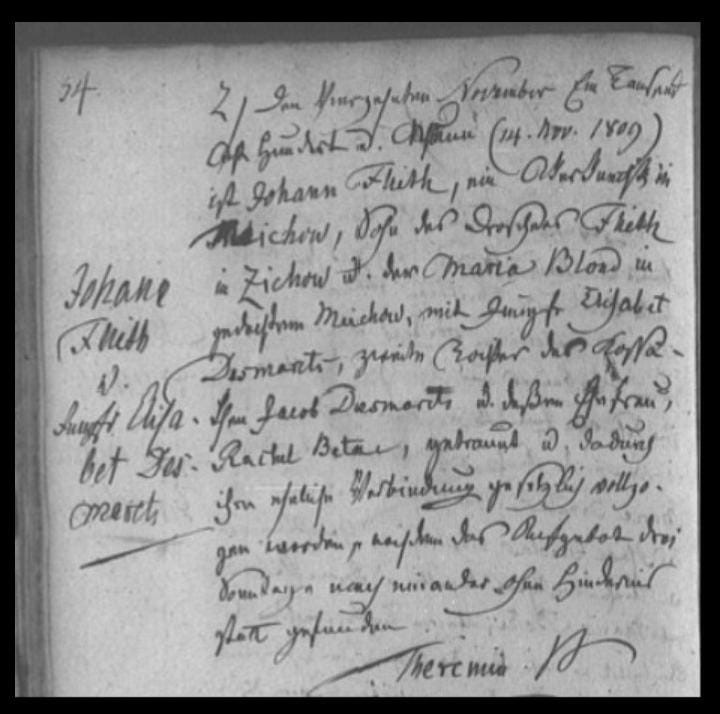
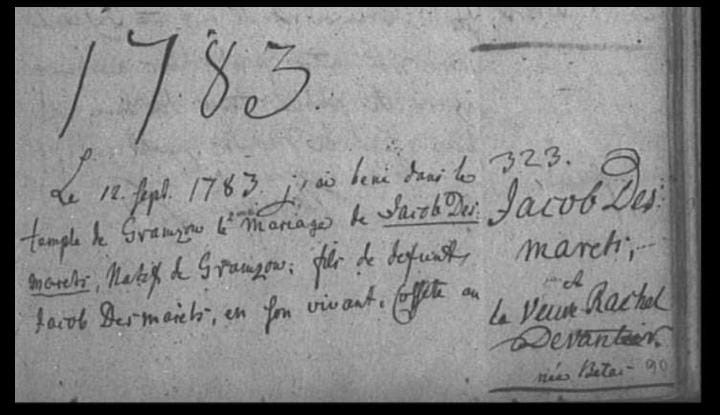
I also came across the names of Jean Baptist Desmerets (Demarez) “De Marais” (c.1665-1714) of the noble family DesMarets who had come to Friedrichstal from Karlsbacker Hof and Jacques Demarets and his wife. Desmarets is also listed as a French Waldesian name in Oscar Hornung’s book, yet other sources say they were Walloons. The names attracted my attention as I had already been exploring links of my father’s family to the Desmares family through my great-great grandfather Johann Michael Clur’s wife **Louise Wilhelmina Fleith. Her grandfather, **Johann Fleith (1777-1865) married **Elizabeth Desmarets (1814-1898). Elizabeth was the second daughter of **Jacob Desmarets (treasurer), (1752 – 1821) and **Rachel Betac, (1759 – 1843). Johann was a labourer from Meichow, a hamlet in Gramzow, Uckermark Brandenburg. Meichow is far from Friedrichstal, yet considering all the movement of religious refugees of that time, a familial link is not impossible.
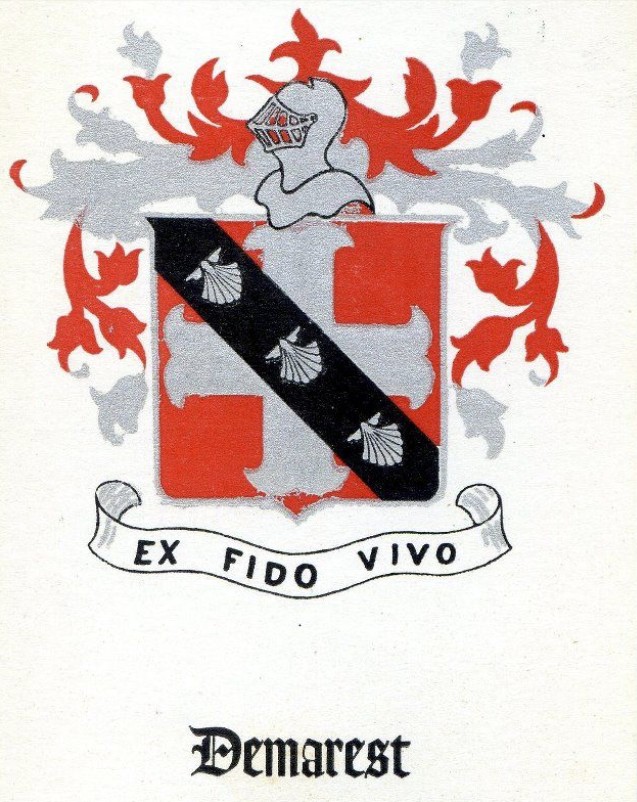
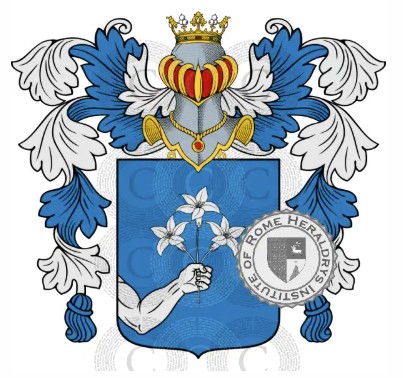
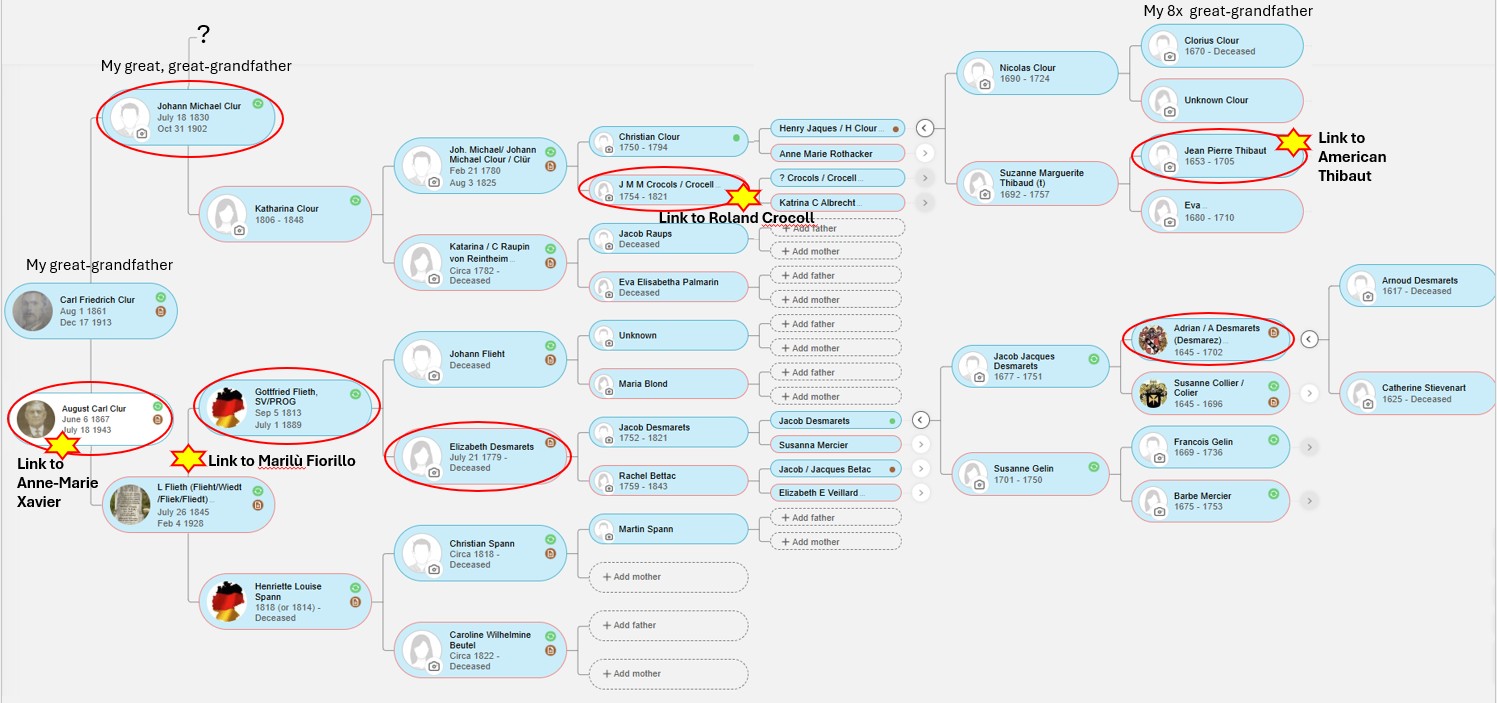
Since I have had my website I have been fortunate to make connections with other members of my father’s extended family who have written to me, some with links to South Africa, but others to Friedrichstal, such as an American descendant of Jean Pierre Thibaut. Between 1833 and 1854 several members of the Thibaut family emigrated to (North) America. Friedrichstal’s population had grown since its establishment, there was insufficient land and economic difficulties lead many young adults to seek a better life in the new world. When researching that link and observing the different spelling of the name over the years, I realized that Cathryn S. Dippo is also a Thibaut descendant. Her transcripts of the Welschneureut and Friedrischstal Church Records have been invaluable to me. I have been contacted by Marilù Fiorillo who wrote her dissertation on the diaspora of the French Huguenots in the territories of Brandenburg – Prussia. She has helped me research our Desmerets connection. Originally from Soissons, the DesMarets family had the marquisates of Maillebois, Blevy, Rouvray and Allègre. When hearing this Annemarie Xavier, daughter of Gertrude Renette Wulff (born Clur) (1909 – 1996) a granddaughter of Johann Michael Clur, whom I also met through the website, told me that she could remember her aunts talking about one of their ancestors having been a “French Countess“. She found that a bit far-fetched then knowing that our ancestors mostly came from Uckermark and not knowing much European history at that time. However, French Huguenots did indeed settle in that area, so the stories her aunts told my indeed be true!
Of course I should also mention Roland Crocoll who was the first person I came across when visiting the Waldesian Church in 2024. Christian Clour (1750 – 1794) married Johana Margaretha Crocoll (Crocollin), daughter of Jean Crocols, on the 11th March 1773. Christian was an attorney, judge, and carpenter in Welschneureut. In order to make it easier to follow these connections I have made the tree below showing where they fit in.
A descendant of Pierre Corbeau the tobacco planter, (now spelt Curbow), also contacted me. Although his family has no direct links with mine as far as I know, he is worth mentioning as Pierre Corbeau’s (<1704-1712) family and three others, founded the Friedrichstal tobacco industry according to Oskar Hornung. It made four families wealthy and provided employment for others in the small town then. Pierre’s eldest son died young and then a few years later his second son emigrated to Philadelphia in 1737. Three of his grandsons later fought in the Revolutionary War.
Knowing all this, having traced my father’s lineage back to 1699, and now knowing they were originally Waldesians and that at least the Thibaut line came from the Alpine areas of Piedmont and Savoy, a visit to the “Heimat und Hugenottenmuseum” of Friedrichstal has been on my to do list for some time. The museum is located in the “Oscar Hornung Haus”, named after Oscar Hornung, also a descendant of one of the first families to settle in Friedrichstal. The museum was unfortunately closed when we visited in January 2024 as it had suffered water damage. I had been told that it would be opening again in the summer as part of the 750th jubilee celebrations of the area, so when planning to travel through that area again in January 2026 on our way to Austria, I was excited to stop and take a look.
Wilfried, had made some pre-arrangements. He sent an email on my behalf in German to the museum’s webmaster to ensure a viewing when passing by during the weekend. Unfortunately, we received no reply. When we called later it appeared that the mail had not been received and we sent it again, this time to another address given to us. Again, no reply. We were however not perturbed and decided to just go there anyway.
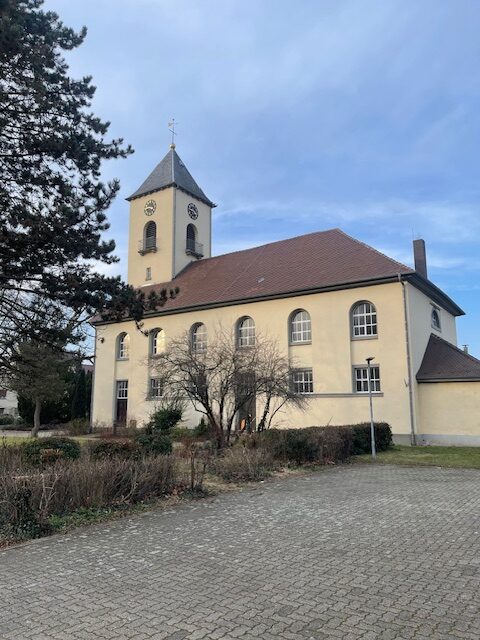
When we arrived at Friedrichstal the ambiance was quite different from our previous visit. There was no snow this time, but the air was crisp and cold, and the sky pale blue with fluffy white clouds. The museum was closed, and no church bells beckoned us. However, the golden numbers and dials on the clock on the tower glistened in the sunlight and organ music could be heard from within the Church where a sermon was being held. We did not go in this time, just took a stroll around the church and museum grounds, took a few photographs and then returned, disappointed and cold to the car.
Weingarten
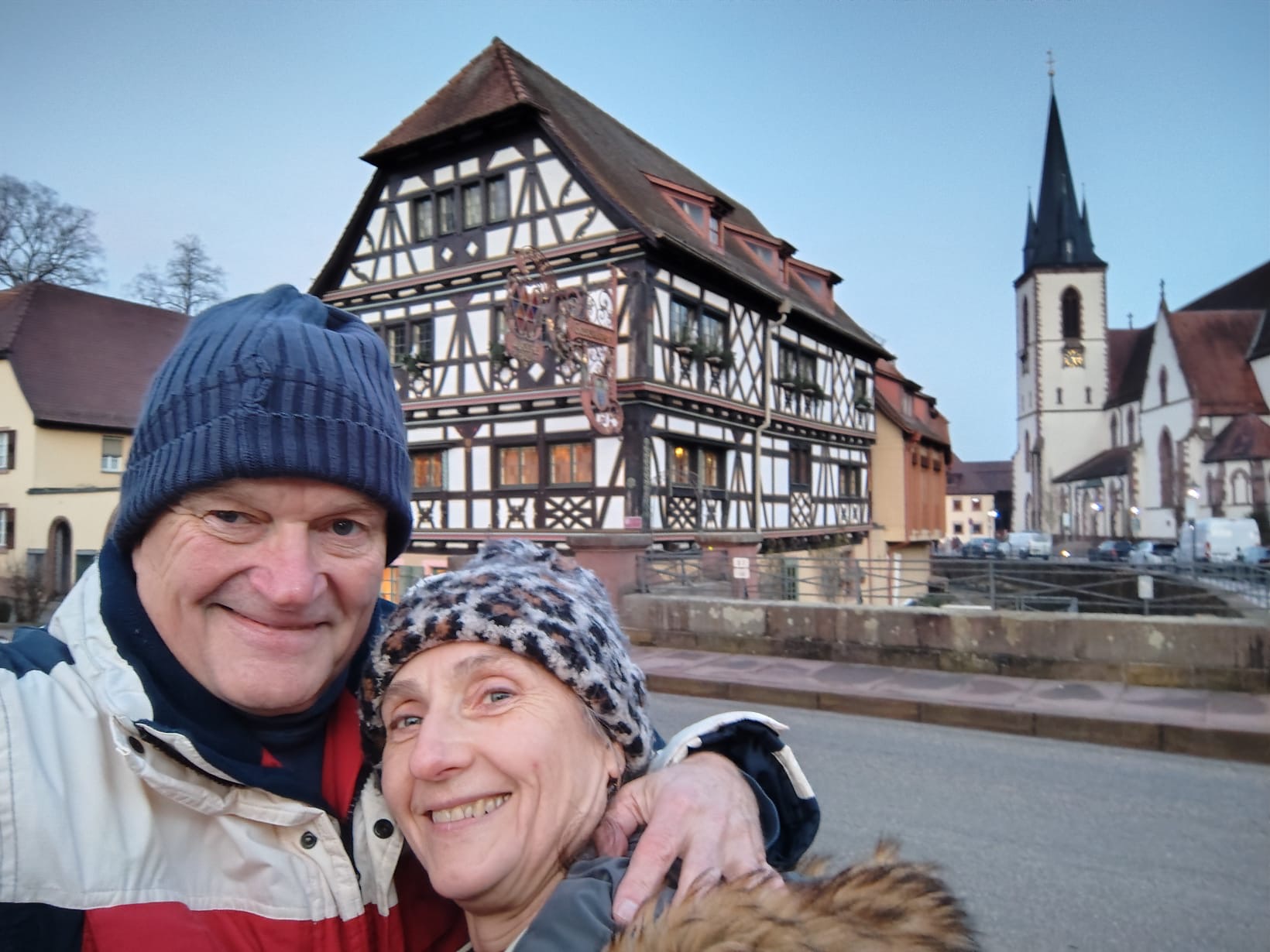
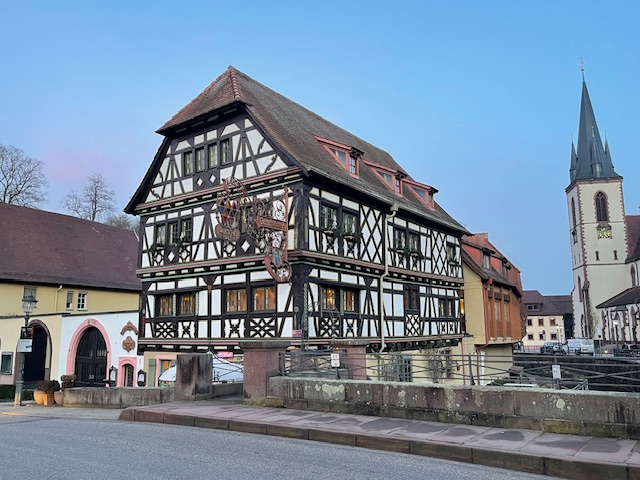
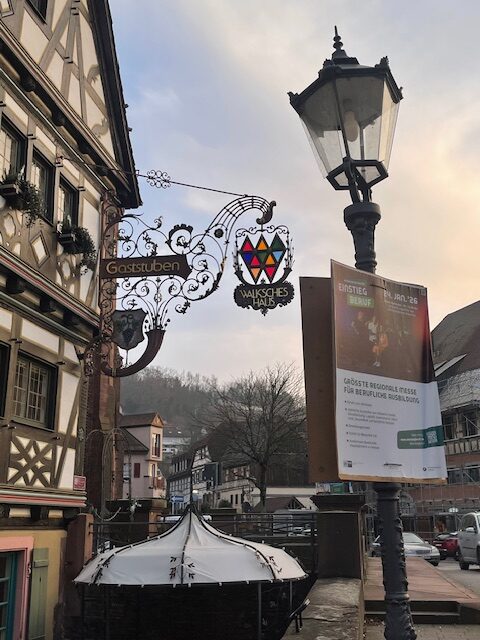
Wilfried had booked us in to stay the night at Weingarten Baden, 10km southwest of Karlsruhe, at the Walk’sches Haus Hotel on the market square. This was a lovely old building built using the old Fachwerk or “half-timbered” method. Its core dates from the beginning of the 16th century. After its destruction in the Palatinate Succession War, it was rebuilt to its present form in 1701. It has been home to a restaurant and hotel since the 1980s.
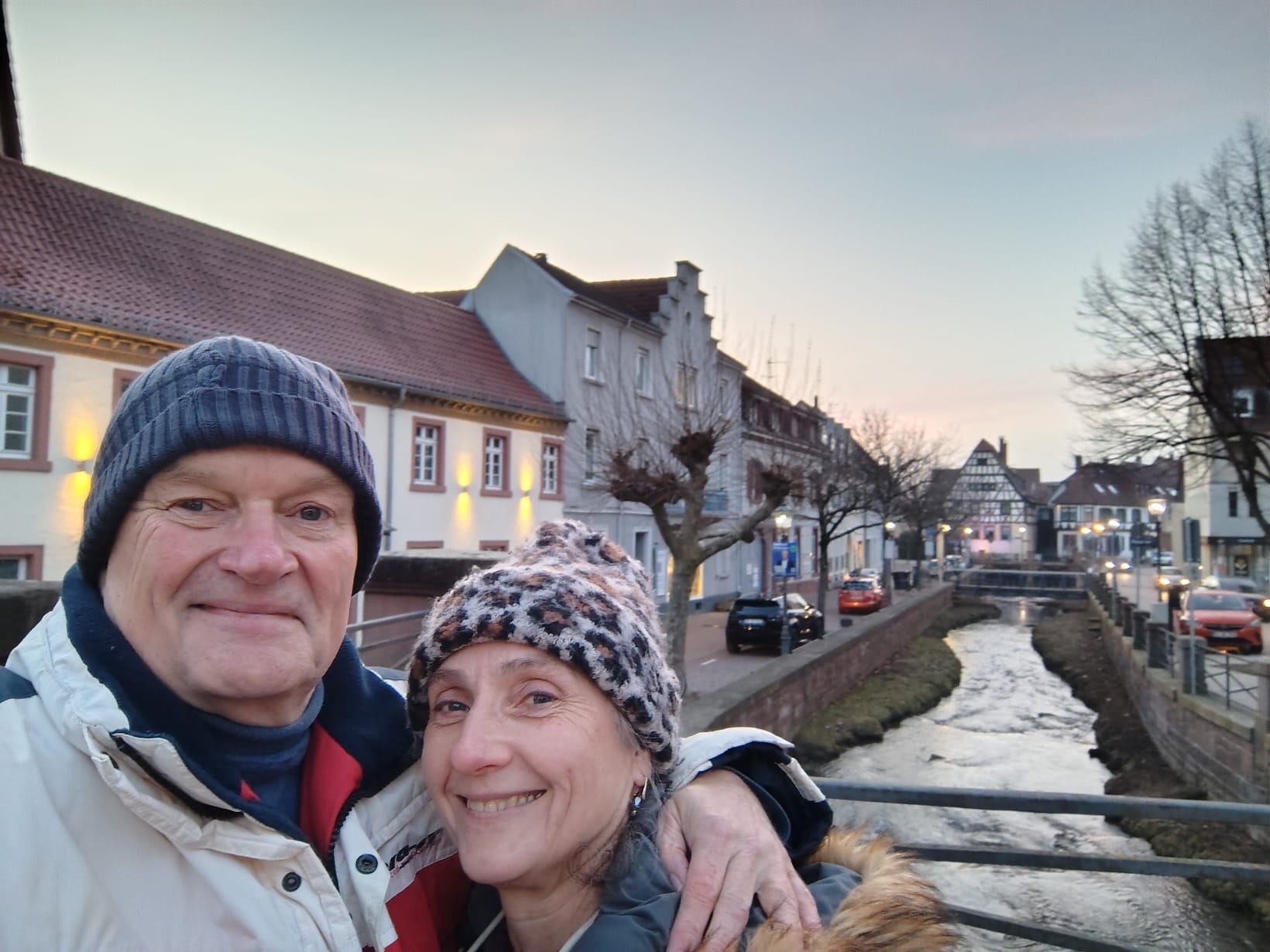
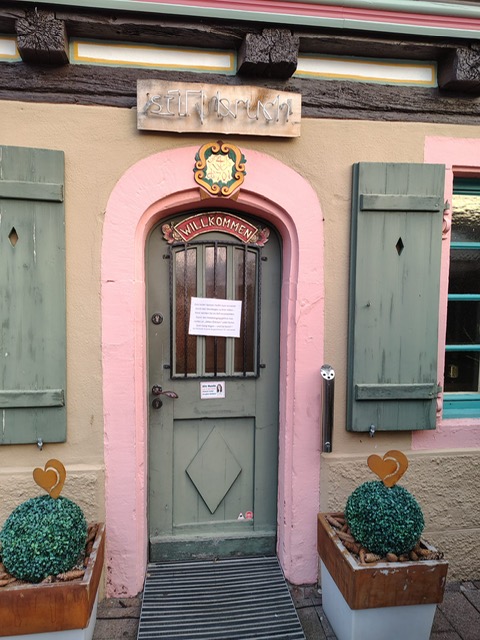
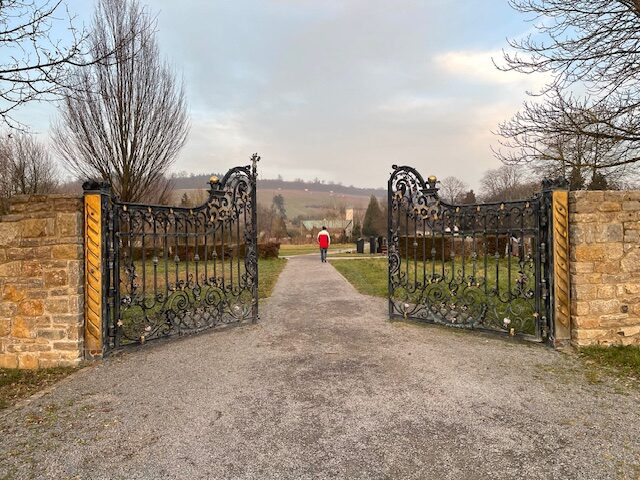
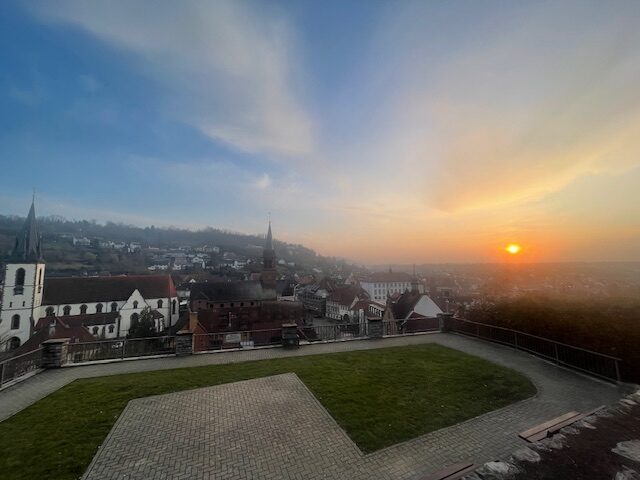
Despite the green wooden door with pink frame displaying the large word “Willkommen”, we could not get in that way and had to enter via the side. Despite the awkward entrance arrangement, the hotel was nicely located in a quiet village. Walking around the town after we had checked in lifted our spirits. Wilfried insisted on making selfies wherever we went. We climbed many stairs to the top of a hill to the watchtower built in 1589 from where we could look down into the valley and on the village of Weingarten as the sun set. Of course we couldn’t not visit the graveyard that invited us with its impressive iron gates with golden gilding. A steam rippled gently through the village towards an old mill. After supper and in a warm bed I had difficulty sleeping as the old wooden floors creaked loudly when people walked along the corridor in the night. There seemed to be plenty of walking going on and I wondered if it was the roaming of old spirits in the old house that I was hearing. The next morning, we were up early and set off directly after breakfast. A snowstorm was expected that afternoon, and we wanted to make it to Austria before the snow.
Saturday 31st January and 1st February 2026 – Mühlacker, Henri Arnaud House and the Waldesian Way
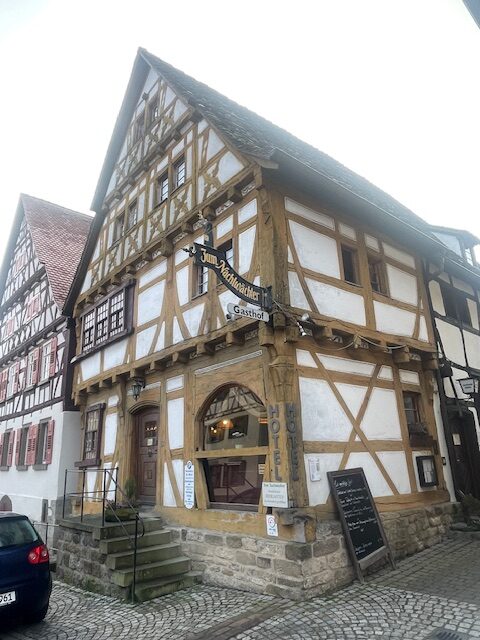
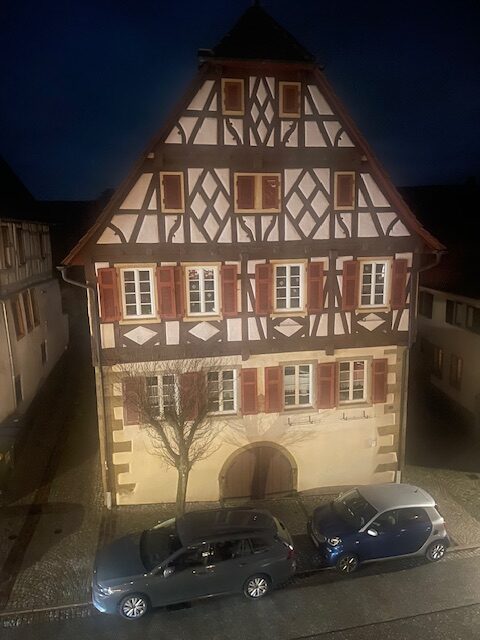
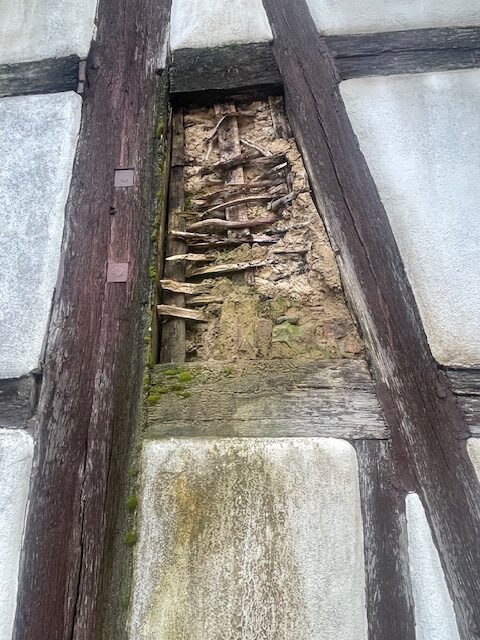
When returning from Austria a week later, we once again enquired about going to the Huguenot museum in Friedrischstal. It appeared that our museum contact had been ill in hospital and regretted that a visit to the museum would not be possible. We had so enjoyed Fachwerk of Walk’sches Haus Hotel that Wilfried decided to book us into the Hotel Restaurant Zum Nachtwächter in Mühlacker which is known for its abundance of old-style houses. The Fachwerk technique uses a wooden skeleton made of wood. The gaps are filled with masonry or a wooden mesh plastered with clay. Diagonal struts provide bracing.
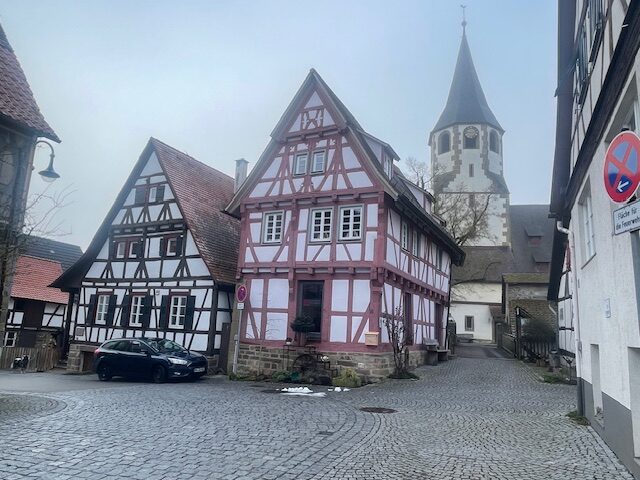
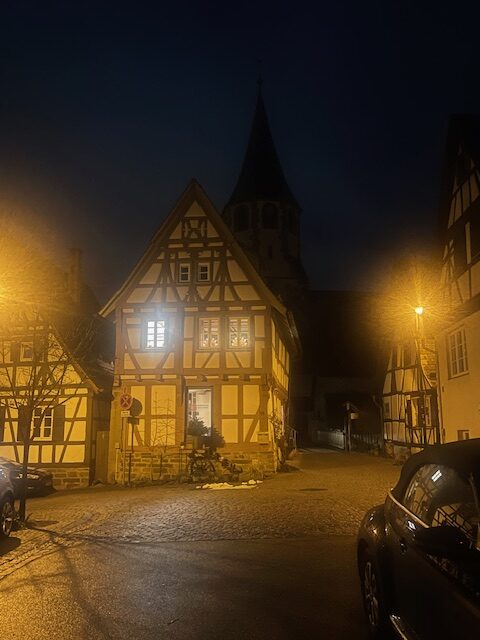
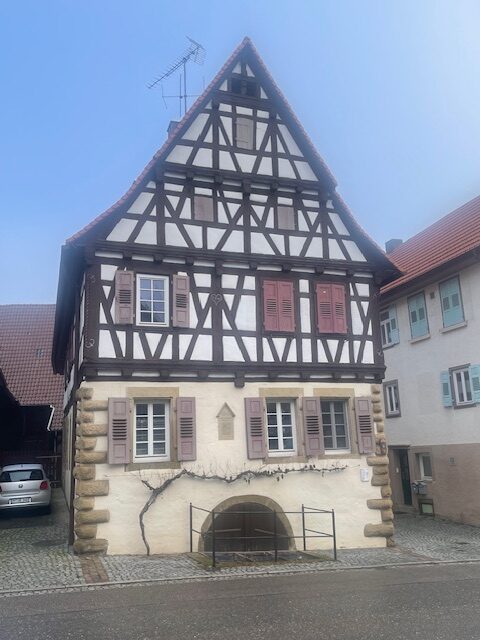
After checking into this charming hotel, we went down the stairs to have dinner. The restaurant was very full, mostly with locals. I was feeling a bit moody being tired from the day in the car and disappointed that we could not visit the museum. I was then overwhelmed by the German menu. I can, if I listen for a while, understand some spoken German as I can speak Dutch, but when faced with German text, and especially menus, I reach my limit. The waitresses were very busy and didn’t have the time to explain the menu to me, and their English was limited. Consequently, I ended up with a meal I wouldn’t have normally chosen. This did not help my mood. We were situated almost in the busy walkway next to a long table where three men were drinking beer and were engaged in a vibrant discussion. It was draughty near the walkway, and I was uncomfortable, so eventually we moved. We ended up sharing the end of the table of the three chatting men. It would then have been rude not to engage with them. Luckily, Wilfried never fails to find something to say and is also very competent when speaking German. I on the other hand, am a bit more reserved in this respect.
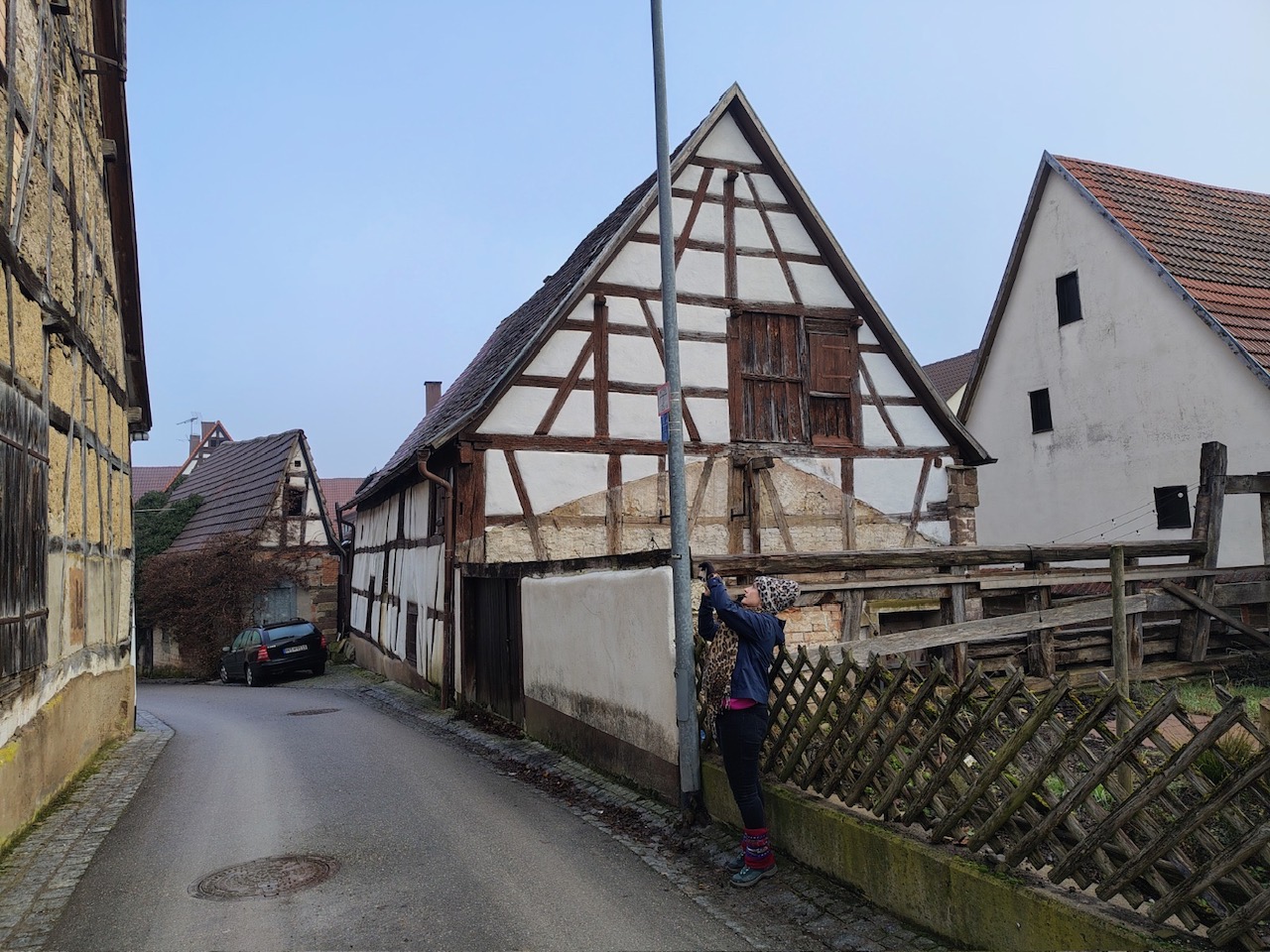
It turned out the three men were a retired ex-Mayor of Mühlacker, an old council member and an historian. They were discussing local politics between 1960 and 80 as the historian was writing a book about it. Wilfried told them that we were in the area as I am researching the origins of my father’s family who were Waldesian refugees, and that we had hoped to go to the Friedrichstal museum, which was unfortunately still shut due to water damage.
We were informed that Mühlacker was also a village where Huguenots were received in the 17th and 18th century, and the ex-Mayor encouraged us to visit the nearby House of Henri Arnaud and follow the Waldenser Walk if we liked hiking and had the time. We wandered through the village after dinner before settling down for a well-deserved rest. After breakfast the next day we walked around the village again, marvelling at the many old half-timbered houses. The mood was quite different in the light of day compared to the spookiness of the evening before. We then set off to the house of Henri-Arnaud located at Henri-Arnaud Strasse 27, 75443 Otisheim.
The Waldesians
A summary of Waldesian history follows. This is because it is crucial, in my belief, to know what was happening in the world at the time of the person you are researching. Knowing the location of their village can be very helpful in determining if you have the found the right person or not. This was certainly my experience after having located Welschneureut as the birthplace of my great-great grandfather.
Peter Waldo a rich tradesman from Lyon, established the Waldesian movement around 1174. They had many lay preachers and focused on voluntary poverty and strict adherence to the Bible. They opposed the power and wealth of the Catholic Church being known initially as the Poor of Lyon. They were later renamed after their founder, or possibly after the valleys they inhabited. In 1184 the Waldesians were declared heretics and forced underground. They were banned as they refused to recognize the prerogatives of local bishops regarding what they should preach and who may do the preaching. However, they were able to establish themselves in the Cottion Alps west of Turin in what is today Italy and France, i.e. in the Alpian valleys of Piedmont and Savoy and were located at the Germanasca, Pallice, Luserna, Angrogna and Rora valleys that fell under the Duchy of Savoy (1416 – 1847). Some lived in France and were located in the Val Pragela in the upper Chisone Valley that has been French since 1349 and that was part of the Dauphiny (a former province of southeastern France roughly corresponding to the current areas of Isère, Drôme and Hautes-Alpes), while others resided in the Val Pérouse, in the lower part of the Chisone Valley that was occupied by France between 1630 and 1696.
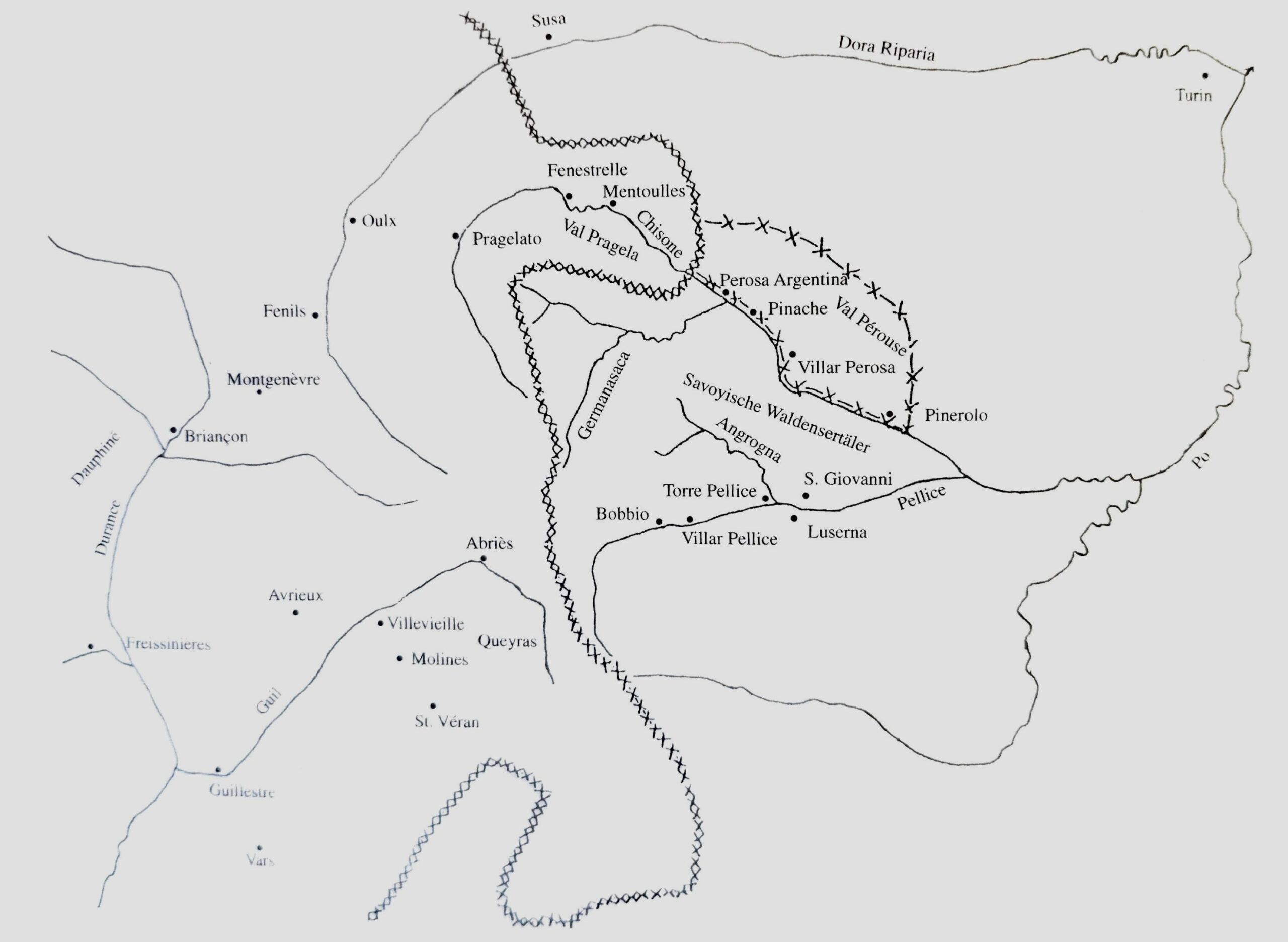
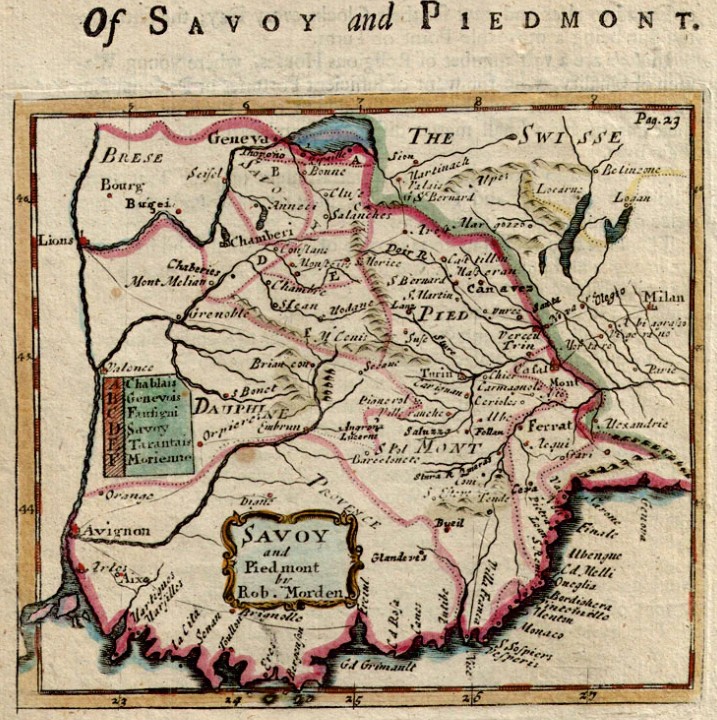


In 1532 the Waldesian Church joined the Reformation movement after a meeting of the synod in Chanforan in the Valley of Angrogna. The Waldesians gained a vast network of Protestant sympathizers as a consequence who provided spiritual encouragement as well as financial and military support during the devastating years of persecution that followed. The Waldesian Church was also responsible for the first translation of the entire Bible into French from the Greek and Hebrew texts. The Olivetan Bible was published in 1535 and became the “authorized version” of French Protestantism.
In April 1598 King Henry IV of France signed the Edict of Nantes that granted Protestants significant religious rights and temporally improved religious tolerance in France. Unfortunately, an epidemic of plague spread through the Waldensian valleys and destroyed a third of the population in 1630 – 11 of the 13 pastors died. The Waldesians sent envoys to Geneva to ask for help and pastors were sent from Switzerland. These pastors made the Waldensians accept the customs of the Church of Geneva and they had to adopt French as the official language of their Church. The original language used by the early Waldensians for preaching, prayer, and Scripture was a vernacular Romance language, primarily Old Occitan (Provençal), the language spoken in southern France and nearby Alpine regions.
In 1685 the Edit of Nantes was revoked by Louis XIV. French Waldensians of the Chisone and Susa Valleys in the Dauphiny were forced by French troops to convert to Catholicism and another 3000 were forced to leave. Henri Arnaud (1643-1721) was the Waldesian Pastor in Piedmont and turned soldier to protect his flock from persecution at the hands of the Duchy of Savoy. He was involved with organizing the exodus of 3000 countrymen to Switzerland and their two attempts to return (1687-1688). Between 1685 and 1687, 2000-2500 Waldensians fled Val Pragela. Half of them ended up in Bern and some continued onto the Palatinate, heading for Württemberg and Brandenburg in 1689. Others returned to Savoy in 1690 after Savoy declared war on France in June 1690 and made peace with the Waldesians. This was known as “The Glorius Return”. This was after Savoy had waged a short war against the Waldesians in 1686 under pressure from France. Those surviving were expelled in 1687 and reached the small city state of Geneva which had broken away from Savoy and was not yet part of Switzerland. Bern received about 1000 of these refugees.
The Palatine Succession War waged from 1688-1697 between France and the Grand Alliance (The Habsberg Monarchy, England and the Dutch Republic) which added to the burdens of the time. Spain and Savoy sided with the Grand Alliance and Switzerland remained neutral. Val Pragela was in the French supply line to Pinerolo, and thus the Waldesians were repeatedly attacked by the French. The war brought disease and epidemics to the valley. Savoy occupied Val Cluson for a while in 1693 and the Waldesians were invited to settle in Savoyard valleys. Almost 1200 Huguenots took advantage of this offer and settled in the Queyras and Durance valleys. On the 30th October 1697 the Rijswijk Treaty was signed ending the 9-year war. However, France and Savoy had made their own peace agreement mid-1696. France returned Val Perouse to Savoy and Savoy agreed to not tolerate the settlement of French Protestants in Savoy. So, on the 1st July 1698 the Duke of Turin signed an edict ordering the expulsion of all Protestants born in France giving them two months to leave under penalty of death. Nearly 3000 Waldesians and Huguenots were driven out of Piedmont for their faith and set off to Geneva and then via ship to Morges. In the spring of 1699, the Waldesians and Huguenots were sent onwards from Bern to Basel and then to Germany by boat. Some travelled on foot from Schaffhausen to Württemberg and Hesse lead by Henri Arnaud where they found a new home. Arnaud became the pastor in Dürrmenz-Schönenberg in 1699. The connection with the Waldensians in Germany remained intact, and Switzerland supported them for more than 100 years with money, advocacy, and French-speaking Reformed pastors.
- References:
- “Etrangers mais freres: les réfugiés huguenots”, by Daniele Tosato-Rigo Pg 266-269 in “Berns Mächtige Zeit” Ed, Charlotte Gutscher, Bern 2006
- “Die Walsenser”, by Theo Kiefner, Pg 269-271 in “Berns Mächtige Zeit” Ed, Charlotte Gutscher, Bern 2006
- Nine Years’ War – Wikipedia
Henri-Arnaud Haus – Henri Arnaud’s House
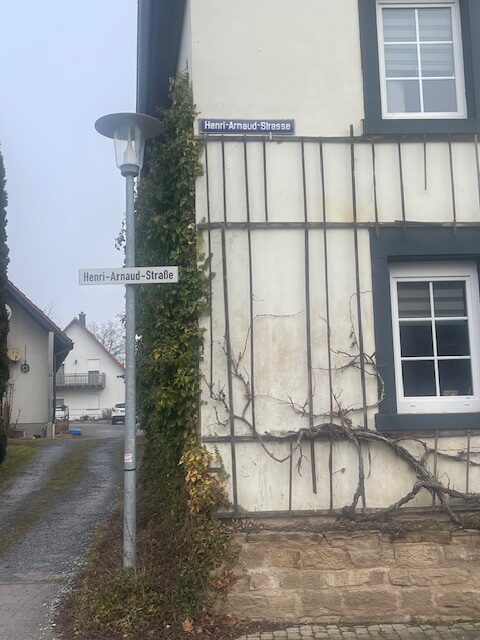
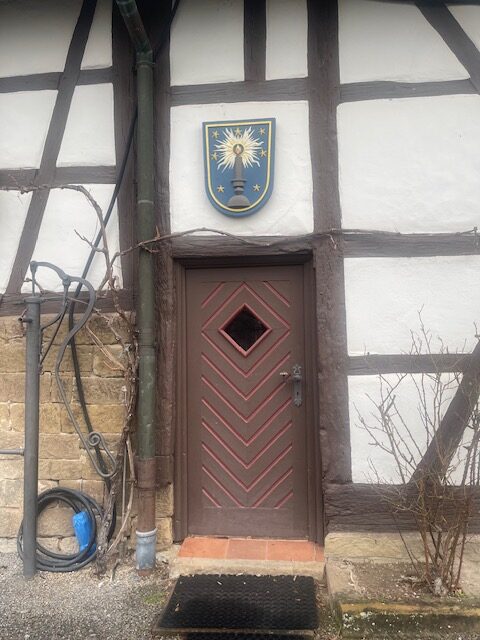
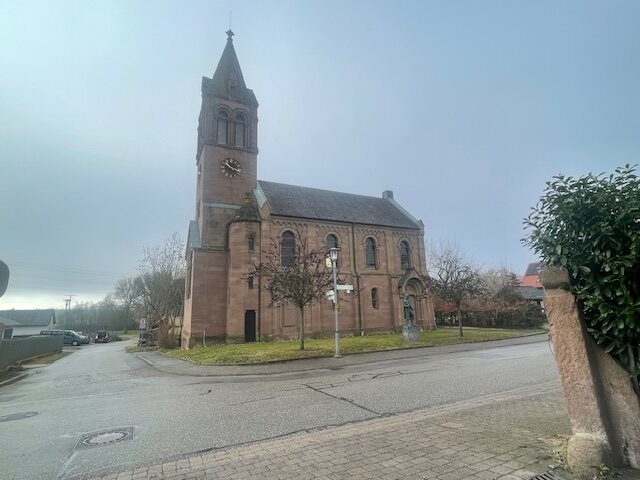
It was very cold when we arrived at Henri Arnaud’s house and I was reluctant to leave the warmth of the car. Across the road there is the impressive Waldesian Henri Arnaud Church, now an Evangelical Lutheran Church. It was built in the neo-Romanesque style in 1882 having been designed by Christian Friedrich from Leins. There is a statue of Henri in front of it and within the church the tombstone of Henri Arnaud.
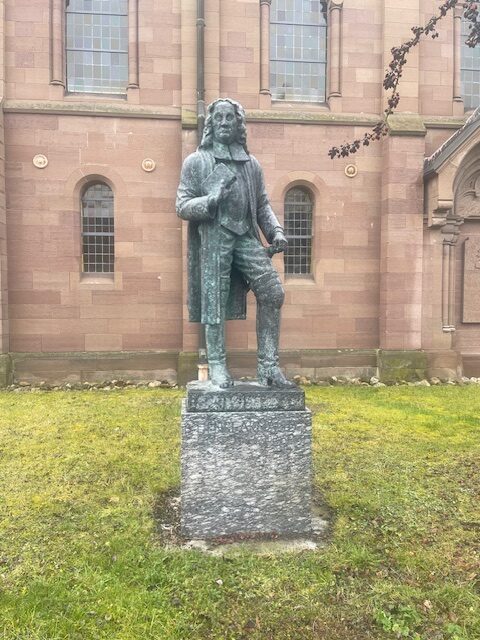
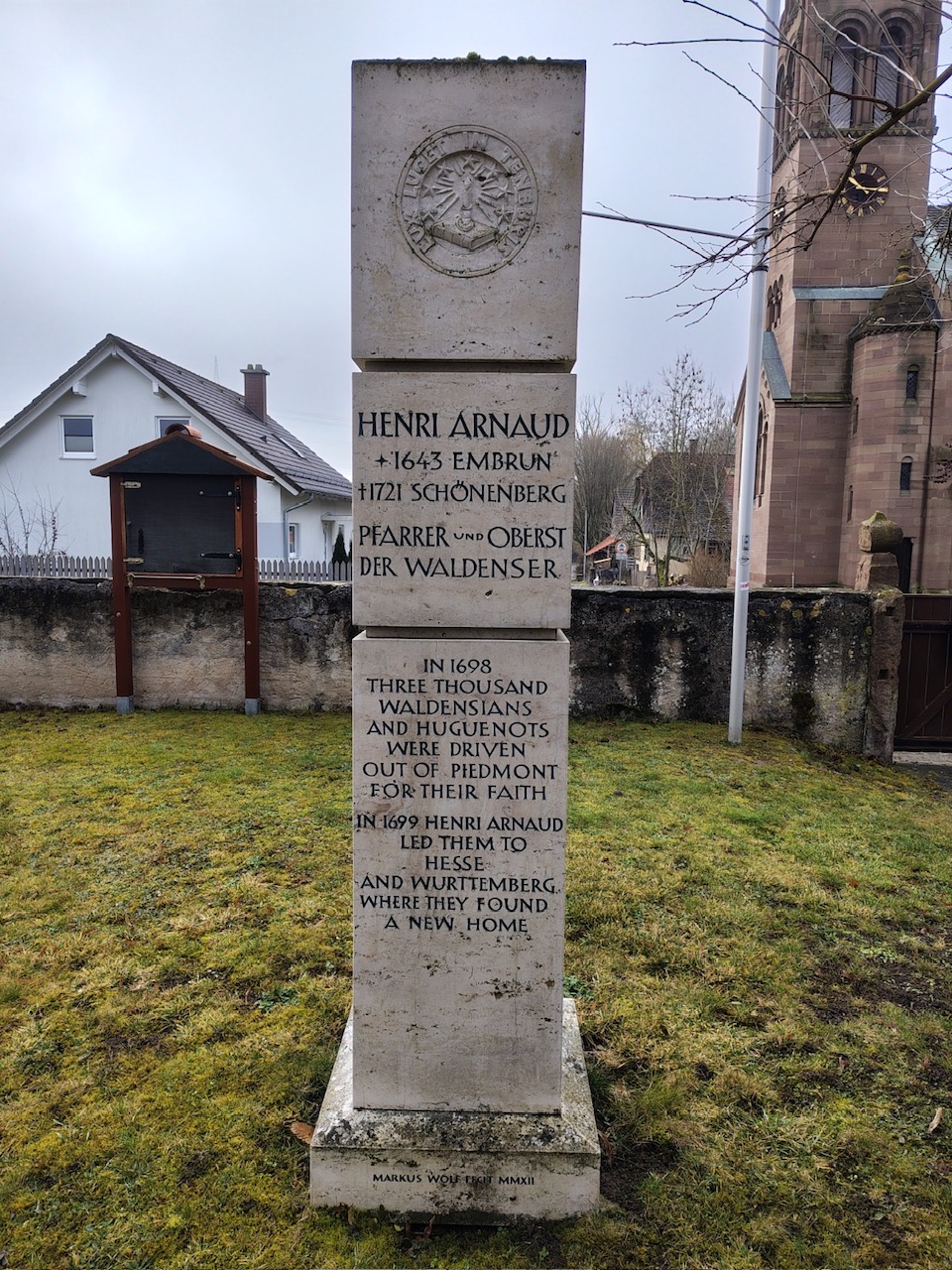
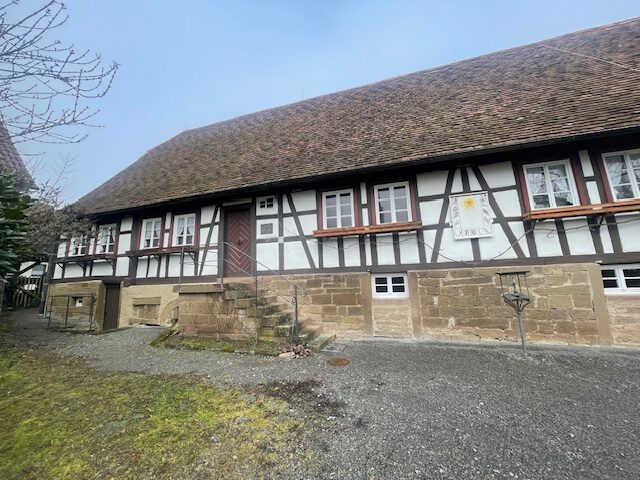
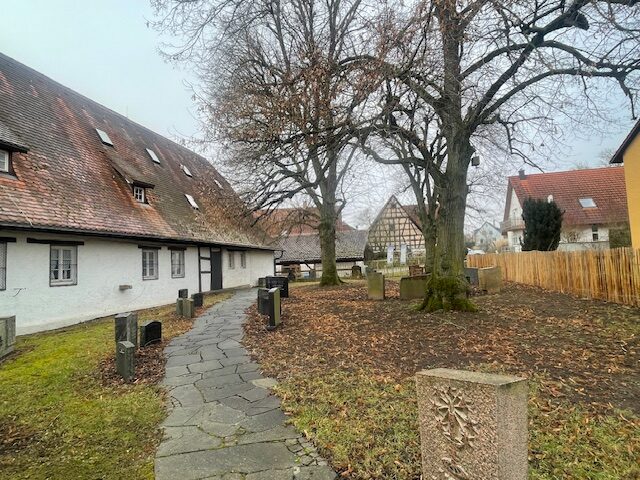
In front of Henri’s house there is a memorial to Henri marking the role he took in leading the Waldesians and Huguenots expelled from Piedmont in 1698 to Hesse and Württemberg where they settled in 1699. In the back garden there is a remembrance area where the names of the families he led can be seen. There were no Clours or Thibauts on the list (again making me think they were from Savoy and not Piedmont, or had fled before 1698, possibly between 1685-1687), but the name Colomb (Colombat, Colombier) can be found among them. After examining the list, I rushed back to the warm car shivering under my thick coat and shawl. If it had not been so cold I would have liked to linger longer. We were also unfortunately unable to visit the museum as it was closed for the Christmas holidays and would only be opening again in February.
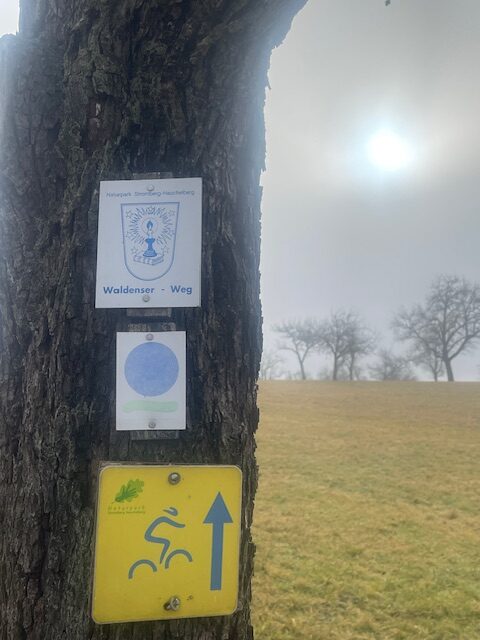
Waldenser Weg – Waldesian Way
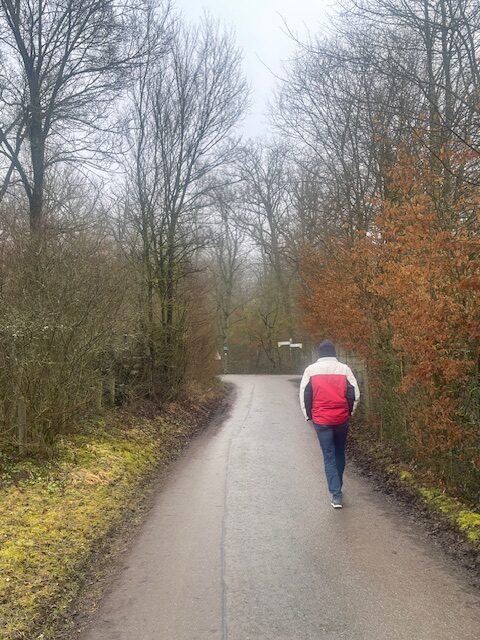
Our next aim was to walk the Waldesian way. Wilfried and I like hiking and often roam the only hills and valleys in Holland situated in South Limburg, so this seemed a must. After parking the car, we had to climb a steep hill before getting to start on the path. It was very misty and cold but less biting than it had been at Henri Arnaud House. Also, walking warms one up.
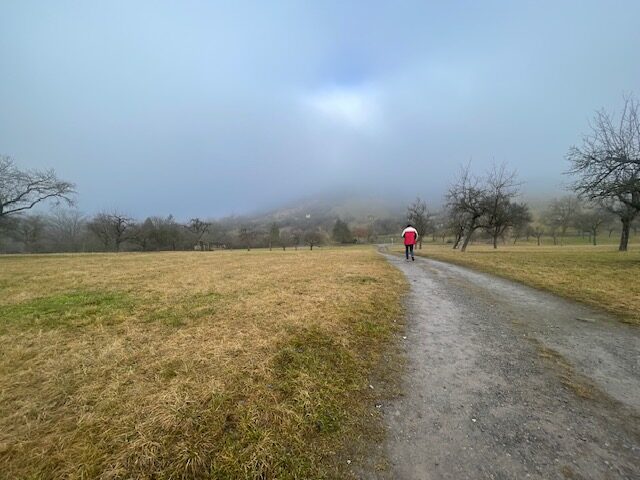
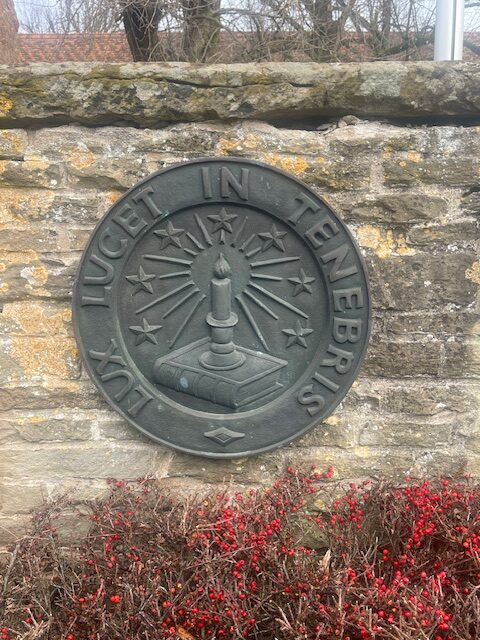
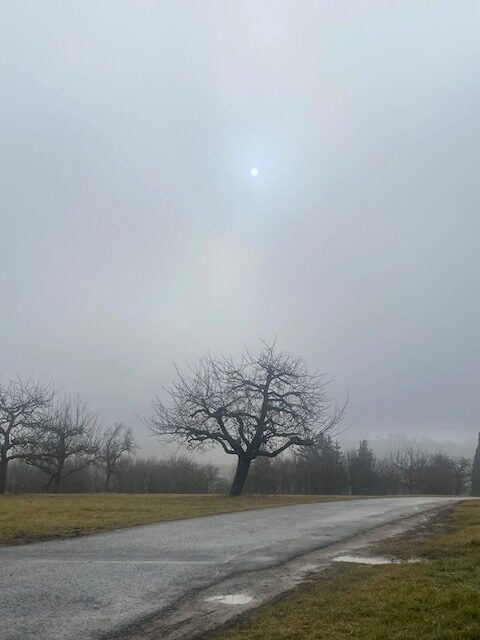
We followed the path through orchards, where it seemed as if we were following a star in the distance that shone through the mist. So, the light shines on, not only in the Waldesian emblem but also guides the way on the Waldesian Way, even in very misty weather.
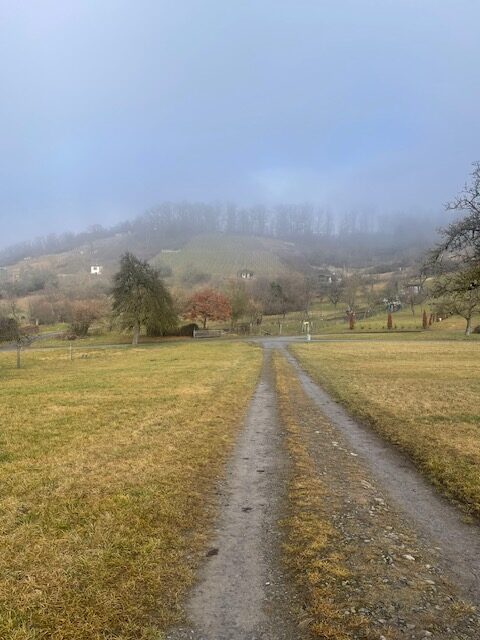
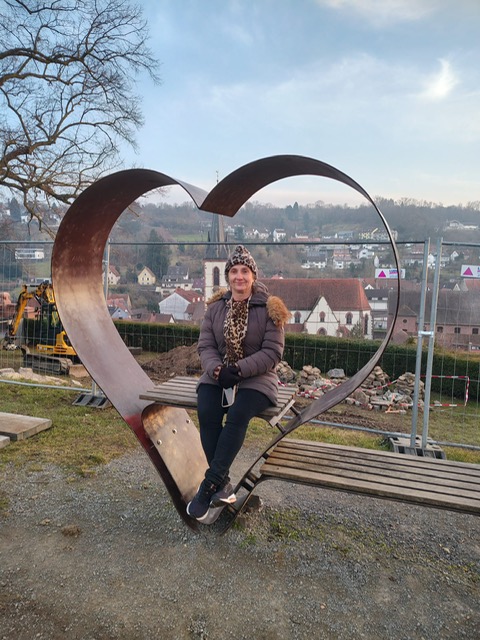
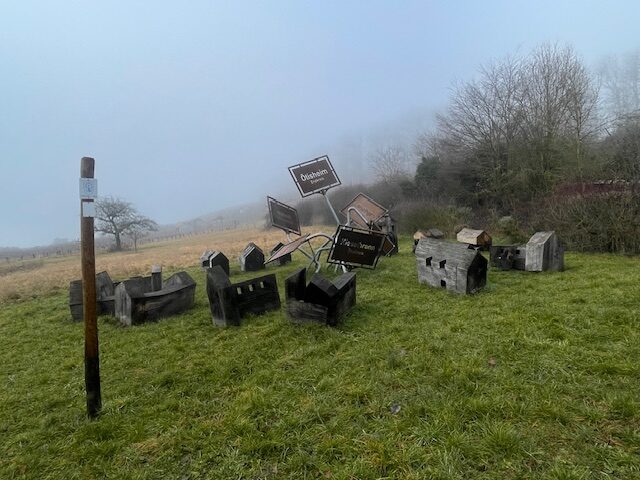
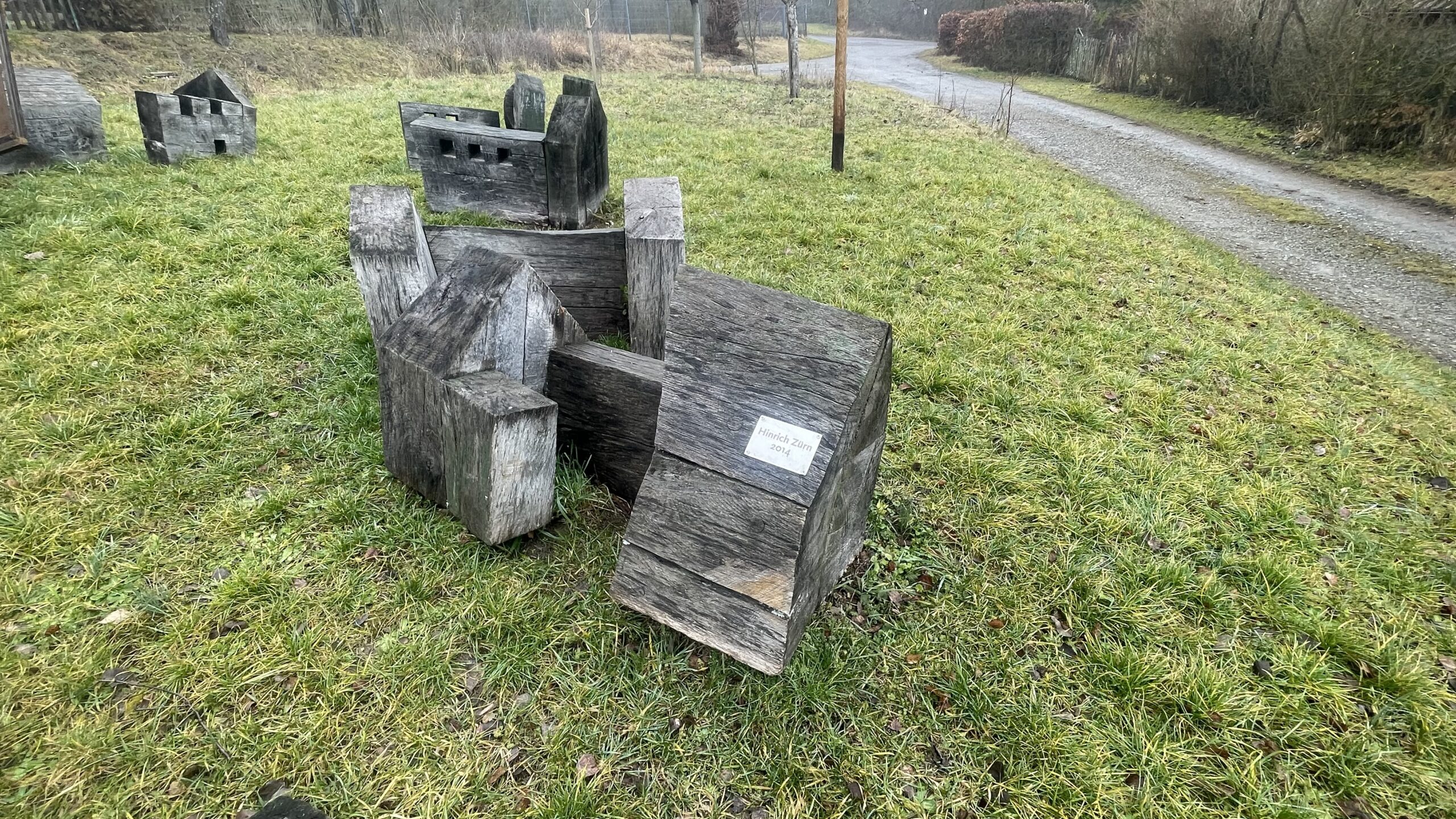
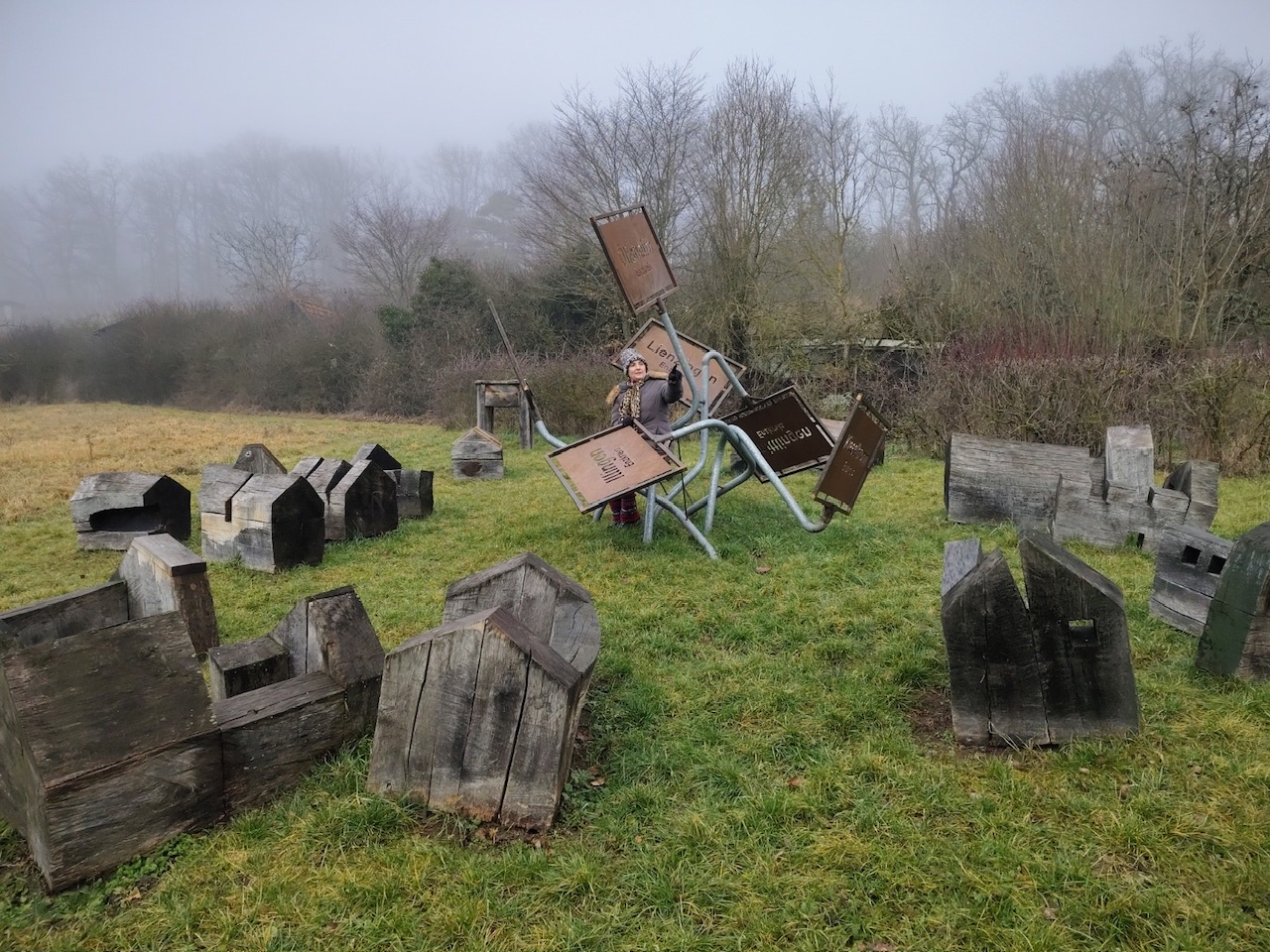
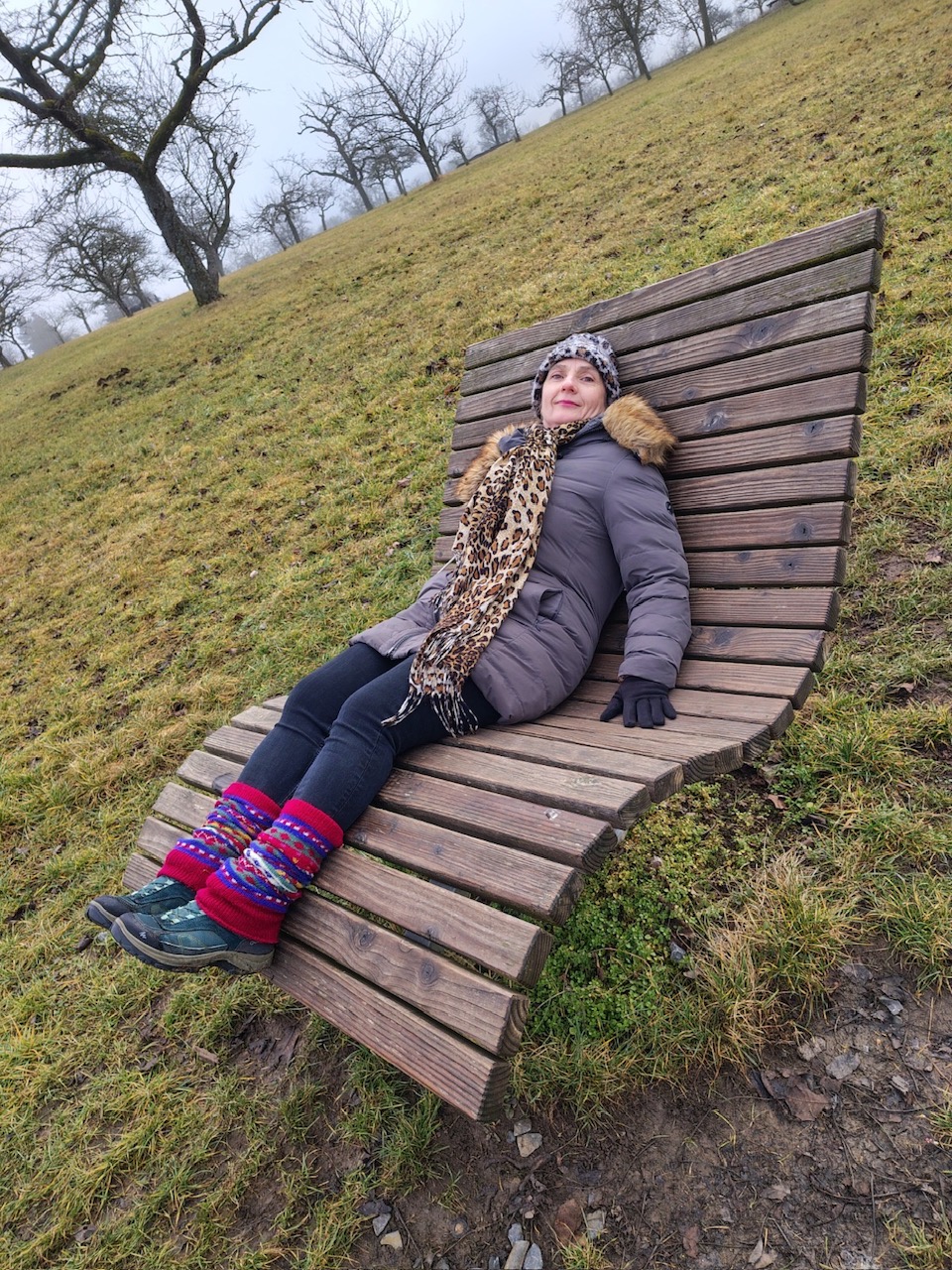
We passed the outdoor sculpture made by Hinrich Zürn in 2014, stopping for a while to take it in. It represents the different colonies that developed and the churches that were erected when the Waldesians and Huguenots settled in the area. I went and sat in the middle of it. In the photograph made by Wilfried I became part of a sculpture representing my Waldesian roots.
As it turned out, Antonia was correct all along about my French lineage. Even though she was Catholic, and those of my family who were religious were definitely Protestants, our roots may be closer than any of us might have imagined on those dreamy afternoons in South Africa that I spent in her marvellous house.
–All photographs in this blog- © Wilfried Visser or © Sally-Ann Clur–